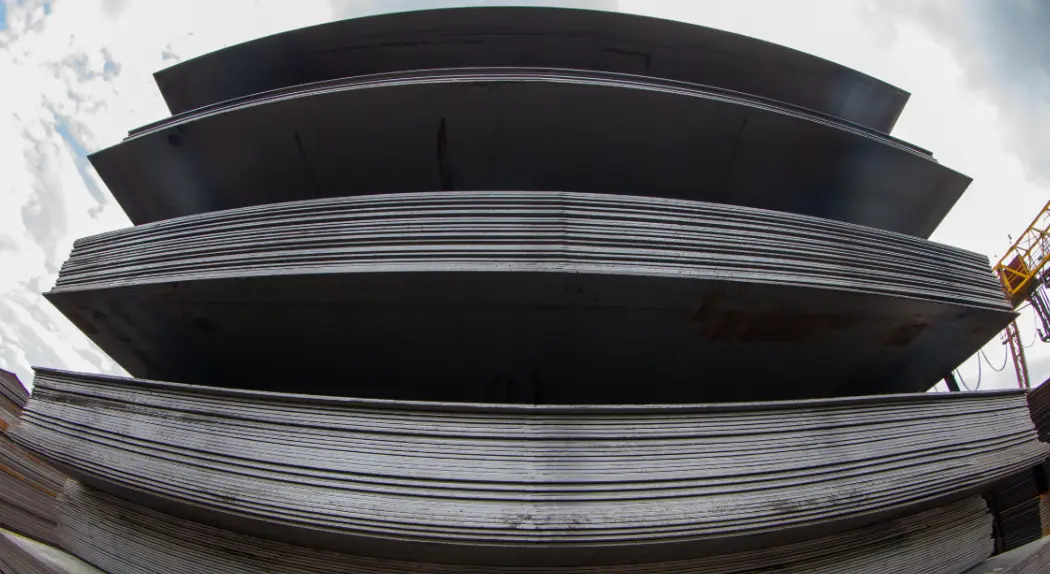
Steel plates and sheets are two of the most versatile and commonly used forms of steel in the modern world. While these two products are similar and undergo the same manufacturing process, they differ in a few key areas. These are namely in thickness and usage.
Thickness (Gauge)
Steel plates and sheets are the result of slabs of steel that are hot-rolled or cold-rolled to a specific set of dimensions. The key difference between plates and sheets in this process is thickness. In the case of steel sheets, thickness, or gauge, is at a minimum of 6mm. Steel sheets, on the other hand, measure below 6mm but are still thicker than foil (at least 0.55mm). The different dimensions of these products serve to accommodate the different purposes that they serve.
Uses
Steel Plates
A steel plate, also known as structural steel, is the result of multiple layers of steel being compressed into a single product. The primary purpose of steel plates is to provide strength and durability. However, they also offer great versatility as they can be cut and welded to serve a wide array of applications. Furthermore, steel plates are resistant to corrosion and long-term damage. This makes this variation of steel essential across a variety of industries that involve large-scale construction and complex, heavy machinery. Steel plates offer foundational support for houses, bridges and stadiums, but can also be found in vehicles, marine and military equipment. Even common household appliances like dishwashers and refrigerators.
Steel Sheets
Similar to steel plates, steel sheets offer great tensile strength, but are preferrable to steel plates in instances where durability is not especially important. Steel sheets are flat and can be corrugated or diamonded if there is a desire for greater strength without the additional weight. They are typically used for applications of a much smaller scale than steel plates, such as cookware, food storage, license plates, etc.
Types of steel sheets and plates
Carbon Steel
Carbon steel is an alloy of iron and carbon, ranging from low to high, that provides a varying amount of strength and hardness depending on the carbon content. The lower the carbon content, the softer and more malleable the steel. The higher the carbon content, the harder and stronger the steel. The best choice of carbon steel depends entirely on whether the application in focus demands greater strength and reliability or greater flexibility and versatility.
Galvanised Steel
Galvanised steel is a form of low-carbon steel with an added layer of zinc that provides additional strength as well as extra protection from harmful effects in the environment such as rust.
Checkered Steel Plates
Checkered plates are characterised by their angular patterns which add more grip and make manually transferring these plates far easier and safer.
Stainless Steel
Stainless steel, although more expensive than most metals, offers greater durability due to its natural resistance to moisture and other potentially harmful elements in the environment. It’s also frequently used in construction and manufacturing industries for its strength and durability.
Copper
Copper is an attractive option because of its resistance to corrosion and the relative ease with which it can be manufactured. Furthermore, copper is also a natural conductor, making it ideal for applications that use electricity.
Brass
Brass is an alloy of zinc and copper and, as such, is highly resistant to corrosion. It also offers great tensile strength at relatively low weight, which along with its durability, make it a great option for industrial use.
Aluminium
Aluminium is lighter and softer than most metal material. This makes it less than ideal for industrial use, but more than sufficient for less demanding products like household appliances and electronics.
Some prominent examples of structures that rely on steel plates include, the Millau Viaduct in France, which is the single highest bridge in the world, and the Commerzbank Tower in Frankfurt, Germany.