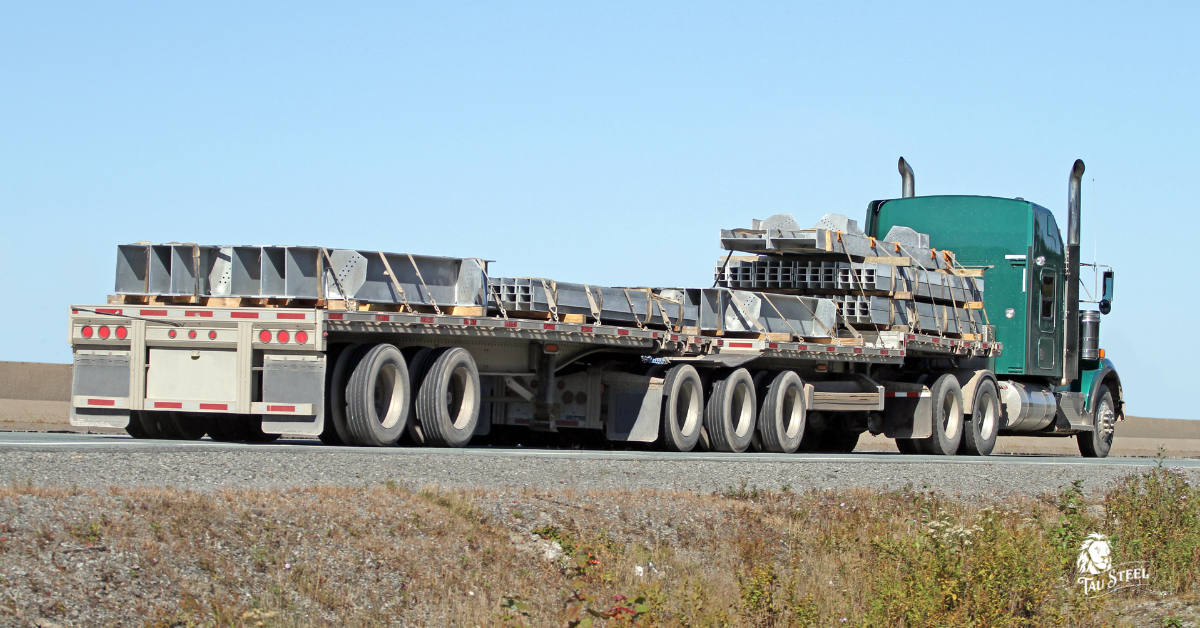
Steel suppliers distribute steel to a range of industries. They are essential to the distribution of high quality steel and to the economy as a whole. When choosing a steel supplier, choose local. Local distributors often provide support and sometimes offer custom deals for larger orders. Compared to online suppliers, local steel businesses may provide warehouse storage and delivery. However, before we look at the types of steel and their uses, let’s look at why steel has become the product of choice for many industries.
Steel in the modern world
Steel has been such a constant in our everyday lives that sometimes we forget just how prevalent and essential it really is. Take the everyday home for example. The very structures that we live in are commonly made, protected and held together by steel, as are the various household appliances that we depend on every day, such as refrigerators, dishwashers, stoves, etc. Beyond all that, the vehicles we drive in, the medical apparatuses used by our doctors, and the various generators and systems that supply electricity and water to the entire country also all rely on steel.
To paint a broader picture, without steel, the world as we know it could cease to exist. Economies would plummet and over a century of technological innovation and progress would be lost. As such, steel is as much a necessity as it is a luxury, and although its value is not always overtly apparent, the reality is that steel is the backbone of modern society.
A brief overview of the steel industry
Steel has been a staple in manufacturing and construction since the early 1900s. It will continue to be an essential building block in our ever evolving and expanding society for centuries to come. But what exactly is it about steel that gives it so much staying power? Well, for starters, steel is significantly stronger and more resistant to damage and degradation than other materials. This means that it is not only safer and more dependable, but also significantly more cost effective in the long run. The greater durability and tensile strength that steel provides also means greater flexibility and innovation in design. This not only allows architects more creative freedom when designing buildings, but also allows engineers to further push the limits of modern-day technology as steel is essential in the development of motor-vehicles, power generators, household appliances and many other everyday essentials.
Steel is not exactly rare either. In fact, it’s one of the most commonly manufactured and recyclable materials around. This makes it future proof in more ways than one. Simply put, steel is here to stay, and the world is all the better for it.
Steel and the South African economy
Beyond being an invaluable resource and a force for structural and technological development, steel is also essential to a stable and growing economy. This is especially true for South Africa, who is amongst the biggest producers of steel on the continent. South Africa relies heavily on the steel industry for manufacturing, infrastructure, job creation and flourishing agriculture and mining sectors. As such, the steel industry has become a cornerstone of the South African economy. But due to recessions, China’s growing dominance in the market, and the enduring effects of COVID-19, the country’s steel sector is in rapid decline, as is the economy. This is why steel supply and distribution is now more important than ever. Without a flourishing steel sector, the country may not be able to rebuild itself.
Synergy
As already alluded to, the steel industry supports a multitude of sectors within South Africa. While this dependency on the success of the industry can be viewed as a potential vulnerability for the country, it should also be seen as a potential opportunity. Yes, the economy needs the steel industry in order to survive, but a thriving steel industry can do so much more than just restore equilibrium.
On the most fundamental level, a thriving steel industry means an influx of job opportunities, and not just job opportunities within steel distribution, but job opportunities in every sector that relies on steel. This is estimated to support around 190 000 jobs in the country, which is a substantial enough figure on its own before taking into account how much more those sectors could contribute to the economy if given the necessary support.
One area in particular where there is great potential for economic upliftment is the mining sector. The exportation of minerals, such as iron ore, has been a major influencing force in South Africa’s economic development for years. The processing of these minerals, known as beneficiation, is especially reliant on a thriving steel industry. And just as the mining sector benefits from the steel industry, so does the steel industry benefit from the mining sector. Collectively, these two sectors could be the catalyst for great transformation within the country.
Steel products and their uses
Steel is an extremely versatile material and serves a variety of purposes. The following is a list of some of the products commonly produced in the construction industry with brief descriptions of each:
Round bars
Round bars are used for a variety of purposes, most commonly for manufacturing machinery and tools but also as foundational reinforcement for buildings.
Square bars
Square bars are best suited to industrial maintenance and fabrication and are typically used in agriculture. They are also ideal for the construction of fencing and gates.
Flat bars
The flat bar is a very versatile form of steel due to its highly malleable and durable nature, making it ideal for building support and frame construction.
Beams
Beams are essential for support and come in a wide variety of forms, each uniquely suited to a given task or situation. The IPE beam and H-beams, for example, are both particularly strong and stress-resistant. The H-beam, however, which is slightly heavier and stronger, is more commonly used as a column. It is better at bearing great loads than the IPE, which is more commonly used as a beam.
Hot-rolled channel
Similar to the IPE and H-beam, the hot-rolled channel offers great stability and support. Where the hot-rolled channel is unique, however, is in how much more flexible it is, affording greater creative freedom when designing buildings.
Tubing
Steel tubing is one of the most commonly used components in the world due to the wide array of functions it serves. It is ideal for facilitating the flow of liquids and gasses, and its ability to withstand high temperatures and pressure make it invaluable to various industrial environments as well as the everyday household.
Angles
The primary purpose of a steel angle is to provide structural support. They are commonly used in the construction of bridges and warehouses. Angles can also be seen in everyday household items and advanced engineering equipment.
Sheets and plates
While similar, metal sheets and plates differ in thickness and the advantages they provide. While steel plates offer greater strength and durability (typically used in building construction and car manufacturing), steel sheets are much thinner and malleable. This makes them better suited for cookware and other household appliances.
Expanded metal
Expanded metal is a type of stretched-out mesh that is typically used for fencing and walkways. It’s highly durable and flexible nature also makes it extremely useful in construction and a variety of industrial settings.
Looking for steel suppliers?
Nationwide delivery of high quality steel. Ask a Tau Steel consultant.